Gaming
Pixel-Perfect Retro Gaming with TinyNES and c0pperdragon
On February 10, 2026 by Jonathan Zdziarski
The photo above isn’t an emulator screenshot, it’s a photo of the actual Zelda game played through my system on an HDMI monitor (any moire effect is a result of taking a picture of the monitor screen itself). For several months, I’ve been playing with the c0pperdrag0n PPU Digitizer; I’ve had a lot of success soldering it into a lot of devices it was never originally targeting: an early Famicom, a NES Test Market console and as of this writing, a TinyNES. The c0pperdragon PPU digitizer easily solders onto the back of a Ricoh 2C02 PPU and converts the picture into a signal its creator has dubbed Lumacode. The signal contains all of the RGB information necessary to render individual pixels for the game in high definition. This signal can then be rendered by a few different upscalers (I use OSSC Pro) to display on an HDMI monitor with absolute perfection.
If you’re not familiar with the TinyNES, it’s fully open source hardware to create a modern, but authentic, NES clone. It comes with DIP slots for the PPU and the CPU from an original NES, and all modern SMT circuitry for the discreet logic, RAM, and other components that aren’t crucial to accuracy. You can purchase TinyNES with clone chips (which do not provide authentic sound or picture), or you can de-solder the original PPU/CPU chips from an old NES and use it in the TinyNES, giving you an identical experience to the original console. If you don’t have any desoldering equipment, you can usually find these chips on eBay as well. Not only is the TinyNES small and modern, but it’s also more power efficient and even supports Famicom expansion audio (great if you like to play old FDS games like me).
The TinyNES has often been overlooked for its much pricier competitor, the Analogue NT Noir, which is an FPGA console capable of providing HDMI output. With the PPU Digitizer, however, the TinyNES can be made to output pixel-perfect video at a fraction of the price – and running original chips, rather than an FPGA reconstruction.
Gaming
A Crash Course in Arcade Hardware Hacking
On November 1, 2025 by Jonathan ZdziarskiWith several different blog posts scattered about, I thought it best to put a link to all of the arcade hardware hacking material in one place, so here it is.
Gaming
Arcade Board CAD Files Now Available
On October 17, 2025 by Jonathan ZdziarskiNow that I’ve cleared the appropriate IP hurdles with my employer, I’m able to make the CAD files available for the arcade boards I’ve blogged about recently. Included in this repo are adapters for:
- Atari Multi-System JAMMA Edge
- TRON / Discs of TRON
- RoadBlasters
- Spy Hunter
- Universal JAMMA Edge
- Williams Multi-System JAMMA Edge
- New: Arduino-Compatible Microcontroller Edges (Atmel 328)
I haven’t blogged about the Williams interface, however it is essentially a universal edge with a signal combiner, op-amp, and -12V boost inverter to support Williams games. I’ve Joust and Defender running on it at home quite happily.
All of these CAD files are for educational use only.
Repository URL: https://github.com/jzdziarski/jamma/
Gaming
Arcade Hardware Hacking: Part III
On October 7, 2025 by Jonathan ZdziarskiSpy Hunter (Steering Yoke, Gear Shift Latch, and Lamp Conversion)
Arcade Hardware Hacking: Part I
Arcade Hardware Hacking: Part II
Spy Hunter is a well loved classic, and by far the most challenging and ambitious title I have worked on to date. While the purists will insist that the only way to enjoy the game is on the original arcade hardware, many (many!) adaptations to various consoles have been met with incredible success. My goal was to adapt the original arcade version of this to work on my coffee table with a JAMMA super-gun, or in a JAMMA multi-cabinet that wouldn’t necessarily have a dedicated steering yoke or pedals. To accomplish this, Spy Hunter comes with many new challenges over and above other games I’ve adapted:
- The MCR board uses a daughter board to obtain readings from potentiometers for both the steering wheel and accelerator. Unlike TRON’s spinner, these controls are entirely analog and are read into absolute values using an ADC (analog-to-digital converter). There is one data “bus” (a shared, physical pathway) sharing inputs ultimately into the MCR board for both steering and accelerator, and the value being read is determined by a separate pin on the main board (which enables the corresponding analog input). In the digital world, both values remain in state and depending on what the main board calls for, you must provide the correct value to the pins.
- One of the more ingenious ways to avoid piracy, Bally/Midway used a lamp panel to display the weapons available to the player at any given time, along with a flashing lamp indicating when the weapons van could be summoned. Along with the steering controls, this helps bind the software to the hardware of the cabinet. Without this lamp panel, the user has no idea when they can call the weapons van (unless they see it parked by the side of the road), what weapons they have readily available, or if they’ve expended them. A lamp driver reads the latches set by the game and illuminates the correct bulbs.
- The board has two separate audio channels, one for effects and one for music. A daughter board named the “Cheap Squeak Deluxe” plays the Peter Gunn theme (which was supposed to instead be the James Bond theme, but Midway couldn’t obtain the licensing). Sound is mixed across two separate amplifiers in the sit down version of the game. I’ll have to merge four audio channels (L and R) into a single mono channel suitable for JAMMA.
- An accelerator pedal must somehow be adapted to controller buttons. This is a somewhat sensitive problem, as nuanced work with the pedal is key to playing the game well.
- The gear shift is a physical stick that shifts between high and low. This, too, will need to be adapted to modern controls. I’ll end up doing this in the form of a toggle.
- In addition to emulating all of this, the adaptation must somehow be easy to play with a controller or joystick. I’m using a BlueRetro Bluetooth adapter with a Nintendo Pro Controller, so with use of the extension harness, I’ll have six buttons at my disposal.
Gaming
Arcade Hardware Hacking: Part II
On August 30, 2025 by Jonathan ZdziarskiRoadBlasters (Steering Yoke Conversion)
Arcade Hardware Hacking: Part I
Arcade Hardware Hacking: Part III
Temple of Doom was a great introduction to the Atari System 1 logic board, and as it turned out was very easy to adapt to the JAMMA standard. With the exception of inverting the directional buttons (and the ridiculous number of repairs I had to make to the board), everything was super straight forward and amounted to simply mapping pins on the logic board to JAMMA pins with the help of the schematics. But Temple of Doom isn’t the only great game released on this platform. System 1 is a modular platform; Atari was able to save a lot of money by shipping out new cartridge PCB kits to arcade owners. These kits typically came with a new marquee and control panel so if you already owned an Atari System 1 cabinet, you could swap out games pretty easily without having to freight an excessively heavy cabinet. Once games lost popularity, they were just dead space in the arcade. This cost square footage, and also a great deal of electricity to run all day. Atari’s approach to game refreshes (which predated JAMMA by a few years) made it easy for arcade owners to save money and space. The System 1 supported a handful of games including Temple of Doom, Marble Madness, Road Runner, and the focus of this post: RoadBlasters.
RoadBlasters was one of my favorite racing games (next to Outrun, which will forever be crowned the best), and was also a System 1 platform game. Unlike Temple of Doom, there’s no joystick. The controls are very nuanced, as they are with many arcade racers, and included a steering yoke and foot pedals. You can imagine this was handled very differently electronically than a racer you’d play on, say, NES (like Rad Racer, which I grew up on). It’s not a very popular game for home arcades because you typically need to own the original steering yoke (or a compatible aftermarket one, if such a thing exists) in order to play it, which means a dedicated machine or something hacky. I’ve always found at-home steering wheels and pedals a bit dumb anyway, and prefer playing a racer with a gamepad or joystick. I’m certainly not going to buy some old arcade yoke (or a complete cabinet!) just to play a game. They’re charging some stupid prices for these too, because they can.
Gaming
Arcade Hardware Hacking: Part I
On July 28, 2025 by Jonathan ZdziarskiTemple of Doom and TRON to JAMMA Conversion
Arcade Hardware Hacking: Part II
Arcade Hardware Hacking: Part III
I’ve been dabbling a bit in amateur EE this summer as my interest in rehabbing arcade games has recently hit a peak. It started with this 40-year old trashed Indiana Jones: Temple of Doom Atari System 1 board I found for cheap. If the seller says, “was working last time I played it, but don’t have the ability to test it now”, that’s code for “I backed over it with my car”, and “it’s trashed and I need plausible deniability for financial reasons”. Nevertheless, it’s a pretty rare find and was one of the three arcade games I remember playing with my dad at the pizza joint before he got too sick, so the game has a lot of sentimental value. Even broken, a complete System 1 with IJ board was a steal for a few hundred bucks. Over the course of a few weeks and hours of reading through schematics, I identified and replaced a total of 11 bad ICs – probably the result of a past power surge. I finally got it running 100% after fixing a whole laundry list of things: sprites, audio, VRAM, NVRAM, speech synthesis, FM synthesis, multiplexers, and address lines.
JAMMA. Why’d it have to be JAMMA.
JAMMA is an industry standard for arcade games, introduced to make it easier (and cheaper) to swap games and controls out without having to use an entirely different cabinet. It’s also what modern at-home systems (a “Super Gun” or a “Mini Gun”) use to play old video game boards on your own setup at home. A Super Gun interfaces with the JAMMA edge on a game board and supplies the necessary voltages and inputs, and plumbs the video and sound out to something that can be rendered on a monitor or CRT. My Super Gun (I own an Axunworks and a HAS, though I prefer Axunworks) sits on a coffee table in my office with an 18″ 1080p monitor, an OSSC Pro scaler, and four Nintendo Pro controllers using BlueRetro receivers. So as old arcade cabinets continue to rot, fall apart, or be exiled to the basement by now-married man-children’s wives, a conversion to JAMMA means that we can preserve some excellent games, allowing the community to play the boards on a modern TV without needing to keep (and upkeep) the very large wooden cabinets they used to come in – many of which were sadly generic. I usually mount my boards on acrylic to protect them at the front and back; this also lets me manage them like giant cartridges, rather than a stack of PCBs.
Gaming
CSI Zelda: Examining Counterfeit Famicom Disk Games
On November 5, 2021 by Jonathan ZdziarskiI’ve previously written about auditing a graded video game, and some of the techniques that can be used to authenticate them. Now, I bring to you a wonderful opportunity to demonstrate what some counterfeit games looks like, and how to spot one. It was a cold December day, when I came across an auction on Yahoo JP by seller hiroki888dorakue: a sealed Legend of Zelda (Zelda no Densetsu) Famicom game listed as “new” and “unopened”. Not only new, but this item has the coveted yellow “Disk System” text in the upper left corner, which only exists on early issue versions (v.0) of the game. For those who aren’t familiar with Famicom, Nintendo released the Famicom system in Japan prior to the US version known as the “NES”. The Japanese version of the “NES” was way cooler than what we had, and had many accessories that our American systems didn’t – 3D glasses (Rad Racer and Falsion look great), a keyboard with BASIC, a revolver (explaining the western theme of games that were strangely released in the US with a futuristic Zapper gun), and the beloved Famicom Disk System. Many popular titles were initially released on the Disk System before they landed in the United States in NES cartridge form factor. Legend of Zelda, released in the US in August 1987, was first released on disk in February 1986 in Japan. The Disk System had many neat features, including a PCM sound channel, giving this first version of Zelda a superior soundtrack. I own three additional copies of this game, two with the yellow text and one with the white text, a change Nintendo made in later production runs.
The Famicom Disk System made it relatively cheap to get a new game. Nintendo set up Famicom Disk Writer kiosks across Japan, where kids could put down a few Yen and get a brand new game written on their old disks. They would also be given a fresh set of labels for the game. This service, which was very awesome if you were a kid, became very popular in Japan until Nintendo discontinued it due to heavy piracy. Unfortunately, the ability to easily copy and relabel disks is also one of the many reasons counterfeiting Famicom Disk System games is so easy.
Today, there are numerous collectible counterfeits of popular (and expensive) titles on the market. A typical counterfeit looks like a brand new, sealed copy of a title but may actually have a fake seal, reproduction inserts, and possibly even a disk that used to be something mundane, like Golf, relabeled with fresh Disk Writer or reproduction labels. In this post, I’ll take a look at a few such counterfeits and point out some of the ways to detect them in your own collection.
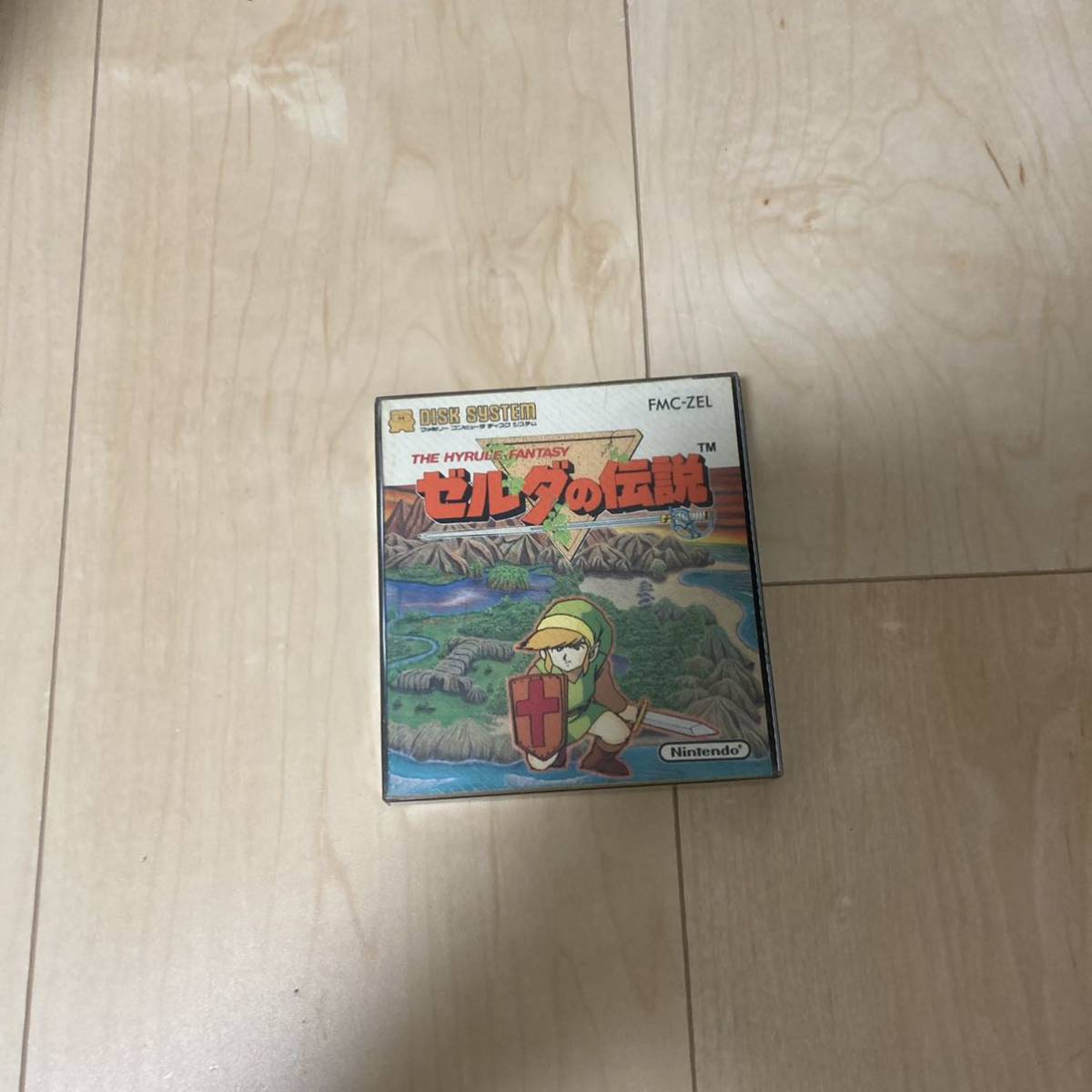
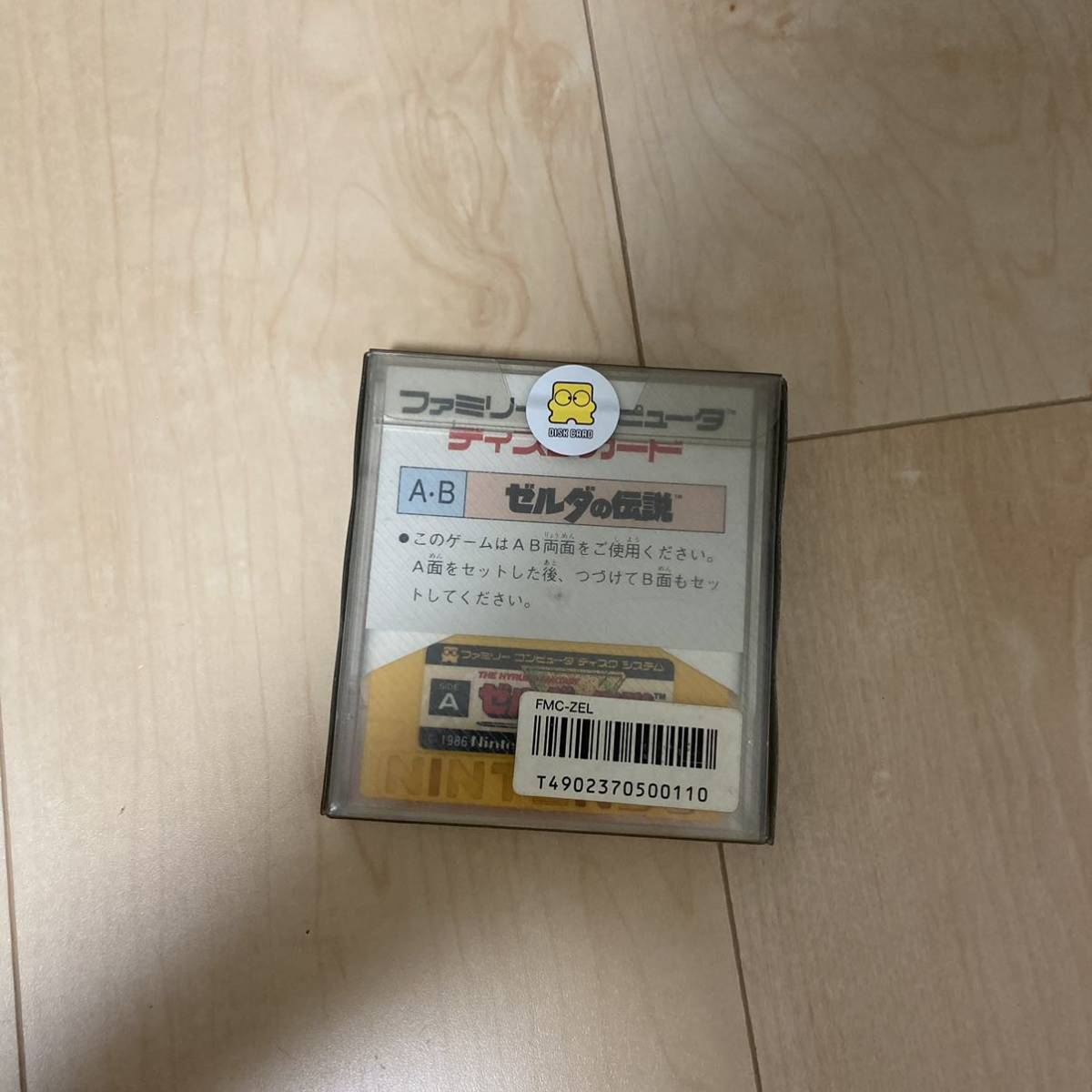
The seller of this Zelda title had 70 positive reviews and only one negative review, which would lead some to believe he’s trustworthy. Most Japanese proxy bidding sites, however, often require hundreds of positive feedbacks before they’ll even allow you to buy from a merchant. There are other problems on the American auction sites. For example, user geisha-export has sold me a few counterfeits in the recent past, but when eBay issues a refund, the seller can have their negative feedback removed. As a result, no one knows that some of these sellers are cashing in on fakes.
Forensics . Gaming
Auditing a Graded Video Game
On November 4, 2021 by Jonathan ZdziarskiAnyone who’s read my blog knows that I am not a fan of video game grading. Grading companies, in my experience, do marginal quality work, and at a superficial level that cannot be audited once an item has been sealed. The holy plastic WATA box is all too often used to convince sellers that their item somehow has more value than it actually does, and buyers the frustration of passing over finds because of greedy sellers who drank the kool-aid. Overall, video game grading has done more harm to the hobby than good.
I was lucky enough to find one seller who must have been frustrated that their VGA graded game hadn’t sold for the inflated prices they were led to believe they could get for it, and so I made a reasonable offer on it based on what an ungraded sealed copy would cost me. They accepted. I decided to use this as an experiment to crack open the enclosure and audit VGA’s work, and thought I’d share my findings so that the community would know what to expect a graded game actually looks like behind the plastic.
Forensics . Gaming
Authenticating Early Nintendo Systems and Games
On September 9, 2021 by Jonathan Zdziarski“How can you have money,” demanded Ford, “if none of you actually produces anything? It doesn’t grow on trees you know.” “If you would allow me to continue.. .” Ford nodded dejectedly. “Thank you. Since we decided a few weeks ago to adopt the leaf as legal tender, we have, of course, all become immensely rich.” Ford stared in disbelief at the crowd who were murmuring appreciatively at this and greedily fingering the wads of leaves with which their track suits were stuffed. “But we have also,” continued the management consultant, “run into a small inflation problem on account of the high level of leaf availability, which means that, I gather, the current going rate has something like three deciduous forests buying one ship’s peanut.” Murmurs of alarm came from the crowd. The management consultant waved them down. “So in order to obviate this problem,” he continued, “and effectively revalue the leaf, we are about to embark on a massive defoliation campaign, and. . .er, burn down all the forests. I think you’ll all agree that’s a sensible move under the circumstances.” The crowd seemed a little uncertain about this for a second or two until someone pointed out how much this would increase the value of the leaves in their pockets whereupon they let out whoops of delight and gave the management consultant a standing ovation. The accountants among them looked forward to a profitable autumn aloft and it got an appreciative round from the crowd.”
Douglas Adams, The Restaurant at the End of the Universe
Ask any frustrated retro-gamer, and they’ll tell you the past couple of years have seen a fake market bubble to jack up game prices. What appear to be credible allegations of fraud and collusion have surfaced between grading companies and auction houses, such as WATA Games and Heritage Auctions, which hopefully will mean fair prices will start to return to a hobby that was previously only frequented by hardcore nerds, rather than investors. But along with this fake gaming bubble came another new phenomenon: fake, high dollar “premium” Nintendo collections. One particular peeve of mine is the introduction of fake “test market” NES sets appearing on auction sites. A “test market” system is a reference to the first hundred thousand units sold as part of a limited release in 1985, before Nintendo knew whether the consoles would be viable. Nobody wanted to carry video games after Atari crashed the market in 1983, and so Nintendo USA, without telling their Japanese parent company, promised retail stores a refund for any unsold systems and a 90 day line of credit. They ended up selling nearly 62 million consoles. Those first 100,000 trial market systems are now considered by collectors to be the Holy Grail.
They’re also fraught with fraud, due to the prices they can fetch, especially if you find one graded. Many fraudulent test market systems include a few genuine components from the original box, but were either missing parts or pieced together. Because they came with the full caboodle – the Zapper, R.O.B., controllers, and two games – a lot of pieces can get lost or broken over time. The replacement parts included at auction often include retail parts from after Nintendo’s worldwide release, severely diminishing their value. Any test market system today could easily include post-release cartridges, light guns, robots, controllers, manuals, boxes, or even circuit boards; buyers and sellers generally believe there’s no way to tell the difference. All too often, someone will buy an empty test market box and throw something together with junk from eBay, selling a $200 system for thousands. In some extreme cases, even the original NES main board would be swapped out for a release board, leaving the only authentic parts the plastic shell! Such fraud can happen with individual games too. These shenanigans ruin the legitimacy and the value of the asset. Fakes have always existed, but with the inflated prices sellers think they can get these days, hobbyists and collectors stand to lose a lot more money than ever thought. Up until recently, test market systems have been considered “a real treat” when found in great condition, but thanks to a manufactured gaming bubble, they’re now fetching big money – and with that comes a lot of people looking to rip you off.